















Short answer: hip dysplasia cannot be undone, but many dogs live full, active lives with it. The basics are a lean body weight, moderate daily exercise without jumping, a joint-friendly home, physiotherapy and a long-term plan made with your vet. Joint supplements can be part of that plan.
Key takeaways
- Hip dysplasia is a genetic, developmental condition of the hip joint, most common in large breeds.
- Keeping your dog lean is one of the most important things you can do.
- Moderate daily exercise is better than bursts of running and jumping.
- Physiotherapy is widely recommended as part of care.
- Always follow your vet's advice on pain relief and treatment.
What is hip dysplasia?
The hip is a ball-and-socket joint. In hip dysplasia, the ball (the top of the thigh bone) and the socket in the pelvis do not grow evenly during puppyhood, so the joint is loose. Over time the body tries to stabilise the loose joint, which leads to osteoarthritis. It is a genetic condition, but diet, growth rate, exercise and body weight also play a part.
Any dog can be affected, but it is most often seen in larger breeds such as German Shepherds, Labradors, Golden Retrievers, Saint Bernards and large mixed breeds.
Signs to watch for
- Stiffness or reluctance getting up after rest
- Weakness or wobbliness in the back legs
- A swaying or "bunny hopping" gait when running
- Hesitating at stairs, cars or couches
- Tiring sooner on walks
Signs can appear in young dogs, but many dogs only show them years later as arthritis develops. Your vet confirms the diagnosis, usually with X-rays. If you notice these changes, also read older dog back legs weak?
1. Keep your dog lean
Extra weight means extra load on sore hips. Vets strongly recommend weight loss for overweight dogs with hip dysplasia, and keeping large-breed puppies lean while they grow. Ask your vet for your dog's ideal weight and measure meals rather than free-feeding.
2. Choose moderate, regular exercise
Exercise keeps the muscles around the hip strong. Aim for regular, moderate walks on soft ground, and avoid high-impact activities like jumping, repeated ball chasing and rough play. Two or three shorter walks often suit a dog better than one long one. Our guide to dogs slowing down on walks has more ideas.
3. Ask about physiotherapy
Physiotherapy (rehabilitation) is widely recommended for dogs with hip dysplasia. A canine physio can show you simple strengthening exercises to do at home, and some clinics offer hydrotherapy.
4. Make home easier on the hips
- Rugs or runners on slippery floors
- A thick, supportive bed away from draughts
- Ramps for the car and couch
- Help getting in and out of the car instead of jumping
5. Build a daily joint routine
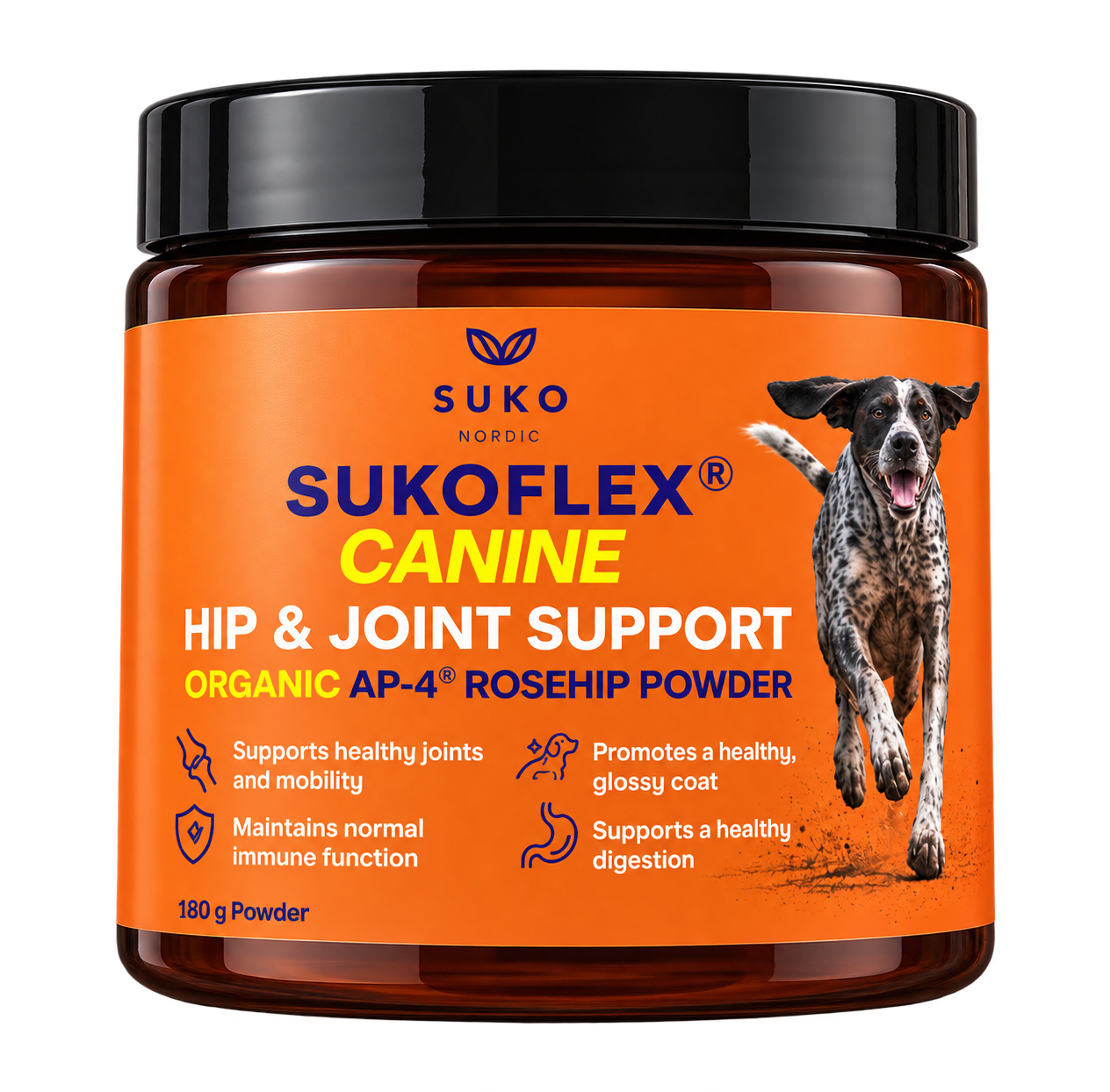
Your vet may recommend pain relief, and many vets also recommend veterinary joint supplements such as omega-3 fatty acids. Daily nutrition is part of the routine too. SUKOFLEX® CANINE is a single-ingredient organic AP-4® rosehip powder that supports healthy joints and mobility. It is mixed into one meal a day and dosed by body weight. Check with your vet before adding any supplement, especially if your dog is on medication.

FOR DOGS · ORGANIC AP-4® ROSEHIP
SUKOFLEX® CANINE
Supports healthy hips, joints and everyday mobility. One ingredient, mixed into one meal a day.
✓ Free shipping Australia-wide✓ 90-day money-back guarantee✓ Subscribe & save 30%
Shop SUKOFLEX® CANINEWhen to see your vet
See your vet if your dog suddenly limps, cannot get up, cries out, or seems to be in pain. Regular check-ups let your vet adjust the plan as your dog ages. Some dogs need surgery, and your vet will discuss the options.
Frequently asked questions
Can dogs with hip dysplasia still go for walks?
Yes, in most cases moderate daily walks are encouraged. Avoid jumping and high-impact play, and follow your vet's advice.
Which breeds get hip dysplasia?
It is most common in large breeds such as German Shepherds, Labradors and Golden Retrievers, but any dog can be affected. See our guide to joint support for large dogs.
Can a supplement fix hip dysplasia?
No. Supplements are not a treatment for hip dysplasia. They can be one part of a daily routine that supports healthy joints, together with weight control, exercise and your vet's care.
This article is general information, not veterinary advice. Always talk to your vet about your dog's health.
Cover photo: A'ishia from German Shepherd Rescue NSW. Photo by Allira Fontana.