




















The short answer: glucosamine, fish oil and rosehip each support your dog's joints in a different way. Glucosamine is a building block of cartilage, fish oil provides omega-3 fatty acids, and rosehip is a plant-based source of antioxidants. The right choice depends on your dog's needs, any sensitivities, and what you can give consistently every day.
If you have started looking into joint supplements for your dog, these three names come up again and again. Each one is popular with dog owners, and many products combine them. This guide compares rosehip, glucosamine and fish oil side by side: what they are, how they support your dog's joints, what to keep in mind, and how to decide what suits your dog. If you are not yet sure whether your dog needs joint support at all, start with our guide to the 7 signs your dog's joints need support.
The quick comparison
- Glucosamine is a building block of cartilage. It is usually sourced from shellfish and is often combined with chondroitin.
- Fish oil provides the omega-3 fatty acids EPA and DHA, which play a role in the body's normal inflammatory response.
- Rosehip is a whole-fruit powder that is naturally rich in antioxidants and vitamin C, which help protect the body's cells from oxidative stress.
None of them is a medicine, and none of them works overnight. All three are forms of daily nutritional support that work best as part of a wider routine.
Glucosamine for dogs
Glucosamine is a natural compound found in cartilage, the smooth, cushioning tissue that covers the ends of bones inside a joint. Supplements are usually made from shellfish shells, and many are combined with chondroitin, another component of cartilage.
What owners like about it
- It is one of the best-known joint ingredients and is easy to find.
- It is widely used in dog chews, tablets and powders.
Good to know
- Source. Most glucosamine comes from shellfish, which matters if your dog has a known sensitivity.
- Check the label. Chews and tablets vary, so look at the full ingredient list.
- Ask your vet which form and amount suits your dog.
Fish oil for dogs
Fish oil is a source of the omega-3 fatty acids EPA and DHA. Omega-3s are part of every cell membrane in the body and are involved in the normal inflammatory response, which is why fish oil is often recommended for joint, skin and coat health.
What owners like about it
- Omega-3s are well researched in dogs and are often recommended by vets.
- Fish oil also supports skin and coat health.
Good to know
- Dosing varies. The amount of EPA and DHA differs between products, so ask your vet how much your dog needs.
- Storage. Store oils as directed on the pack.
- Calories. Oils add energy to the diet, which is worth knowing if you are managing your dog's weight.
- Medication. Talk to your vet before starting if your dog takes medication or is due for surgery.
Rosehip for dogs
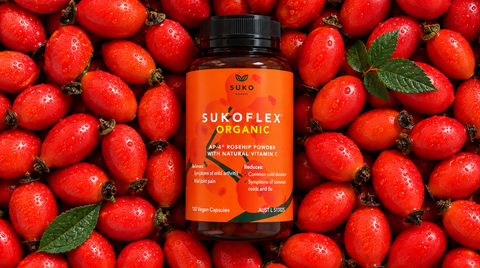
Rosehip is the small red-orange fruit of the wild rose. Dried and milled into a fine powder, it is naturally rich in vitamin C and antioxidants, which help protect the body's cells from everyday oxidative stress. Because your dog's joints work every time they move, this antioxidant support is one of the reasons rosehip is used to support healthy joints in dogs. Our beginner's guide explains what rosehip powder is and how it supports joints.
What owners like about it
- A single, whole-food ingredient. A pure rosehip powder contains nothing else, so you know exactly what your dog is eating.
- Easy to give. A powder is simply stirred into food, with no tablets to hide.
- Plant-based. A good option for owners who prefer to avoid shellfish or fish-derived ingredients.
- Researched in people. Standardised rosehip has been studied in published clinical research in people (not dogs). See the studies behind AP-4® rosehip.
Good to know
- Not all rosehip is the same. The variety, growing conditions and processing all affect the final powder. Look for a standardised, traceable source.
- Consistency matters. Like any nutritional support, rosehip needs to be given daily over several weeks.
Wondering about safety? Read our guide: Is rosehip safe for dogs?
Can I combine them?
Many owners do. Because rosehip, glucosamine and fish oil work in different ways, they are often used together. If you plan to combine supplements, check the total ingredient list for overlaps, introduce one product at a time so you can see how your dog responds, and run your plan past your vet, especially if your dog has a health condition or takes medication.
How to choose a joint supplement for your dog
The best supplement is one you understand, one your dog will happily eat, and one you can give consistently every day. Ask yourself:
- Do I know exactly what is in it, and where it comes from?
- Does my dog have any sensitivities, for example to shellfish or fish?
- Is the dosing clear and based on my dog's body weight?
- Will I realistically give it every day?
For a full checklist, see our guide on how to choose a joint supplement for your dog.
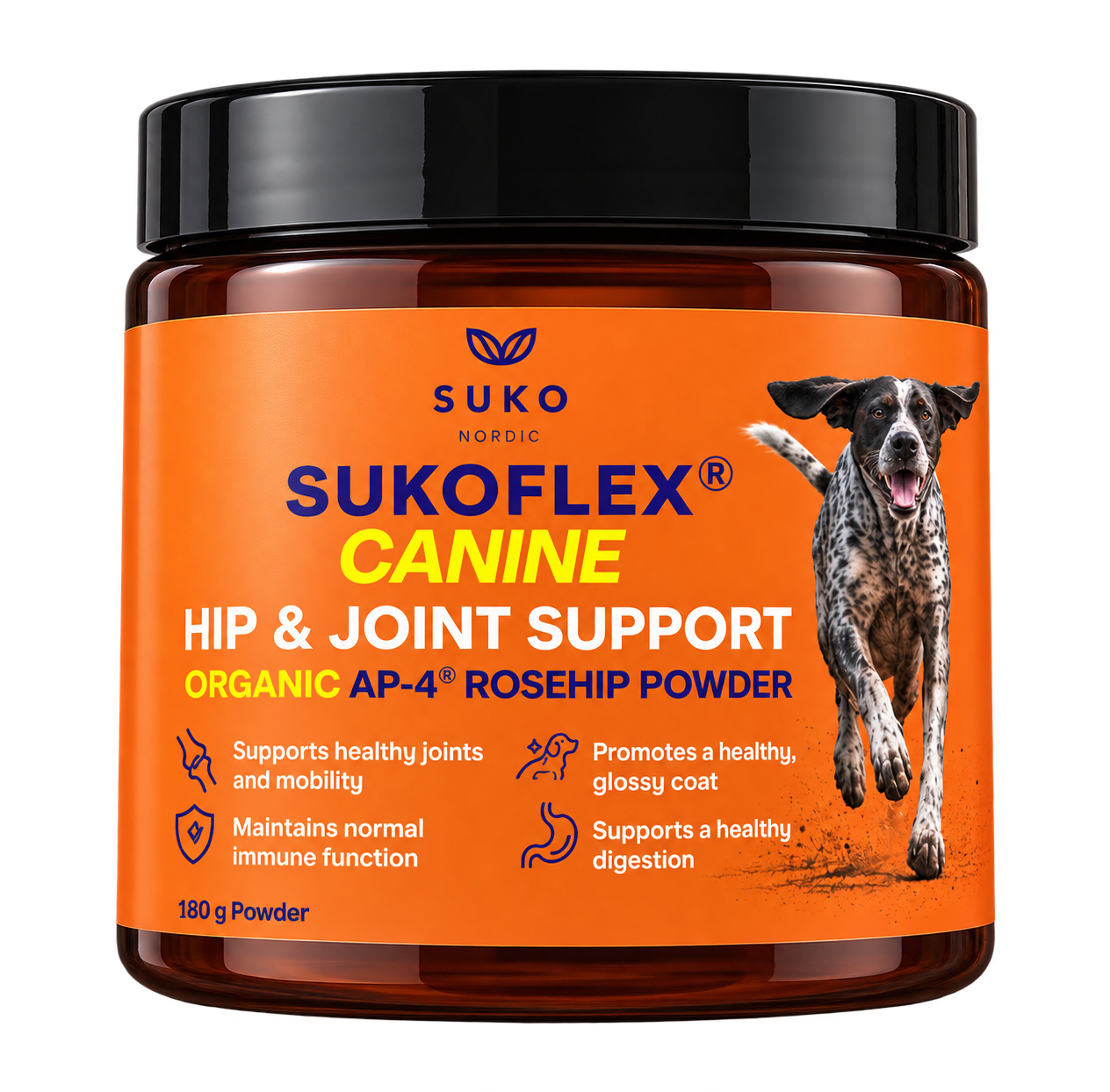
Why we chose rosehip for SUKOFLEX® CANINE
SUKOFLEX® CANINE Organic Rosehip Powder is a single-ingredient supplement made from the standardised AP-4® Rosa canina rosehip, grown organically in Southern Chile. It is the same ingredient used in SUKOFLEX® for humans. There are no fillers, flavourings or additives, and each batch is traceable back to the plantation.
It is designed to support healthy joints and mobility in ageing and active dogs. Simply stir the recommended amount, based on your dog's body weight, into one meal a day. Our dosage guide shows how much to give.
When to talk to your vet
Speak to your vet before starting any supplement if your dog has a health condition, takes medication or is due for surgery. Contact your vet promptly if you notice limping, swelling, pain when touched, or a sudden change in how your dog moves. A supplement supports your dog's normal routine; it is not a substitute for veterinary care.
Frequently asked questions
Which is better for dogs: glucosamine or fish oil?
They work differently, so one is not simply better than the other. Glucosamine is a building block of cartilage, while fish oil provides omega-3 fatty acids. Your vet can help you decide what suits your dog.
Is rosehip better than glucosamine for dogs?
Rosehip and glucosamine support joints in different ways. Rosehip is a single, whole-food ingredient that is naturally rich in antioxidants and suits owners who prefer a plant-based option without shellfish. The right choice depends on your dog and your preferences.
Can I give my dog rosehip and fish oil together?
Many owners do, as they work in different ways. Introduce one at a time and check with your vet first if your dog has a health condition or takes medication.
How long do joint supplements take to work in dogs?
Nutritional support is gradual, and every dog is different. Give any supplement a consistent trial of several weeks and keep simple notes on how your dog gets up, walks and plays.
The takeaway
Rosehip, glucosamine and fish oil can all play a part in supporting your dog's joints. Glucosamine supplies a building block of cartilage, fish oil provides omega-3s, and rosehip offers a simple, plant-based source of antioxidants. Whichever you choose, pair it with a healthy weight, gentle daily exercise and a supportive bed, and involve your vet in the plan.
Looking for a simple, organic, single-ingredient option? Try SUKOFLEX® CANINE with free shipping Australia-wide and a 90-day money-back guarantee.