




















Your dog will never tell you when something feels uncomfortable. They will not complain, and most of the time they will still greet you at the door with a wagging tail. But they will show you – if you know where to look.
Dogs are remarkably good at hiding discomfort, which means many owners only notice joint changes once they have been building for a while. The good news is that the earlier you spot the signs, the sooner you can start supporting your dog's joints and everyday mobility. Here are seven signs to watch for, and simple things you can do today.
Key takeaways
- Dogs instinctively hide discomfort, so joint changes are easy to miss.
- Morning stiffness, shorter walks and hesitating on stairs are common early signs.
- Gentle movement, a supportive bed and a healthy weight all help.
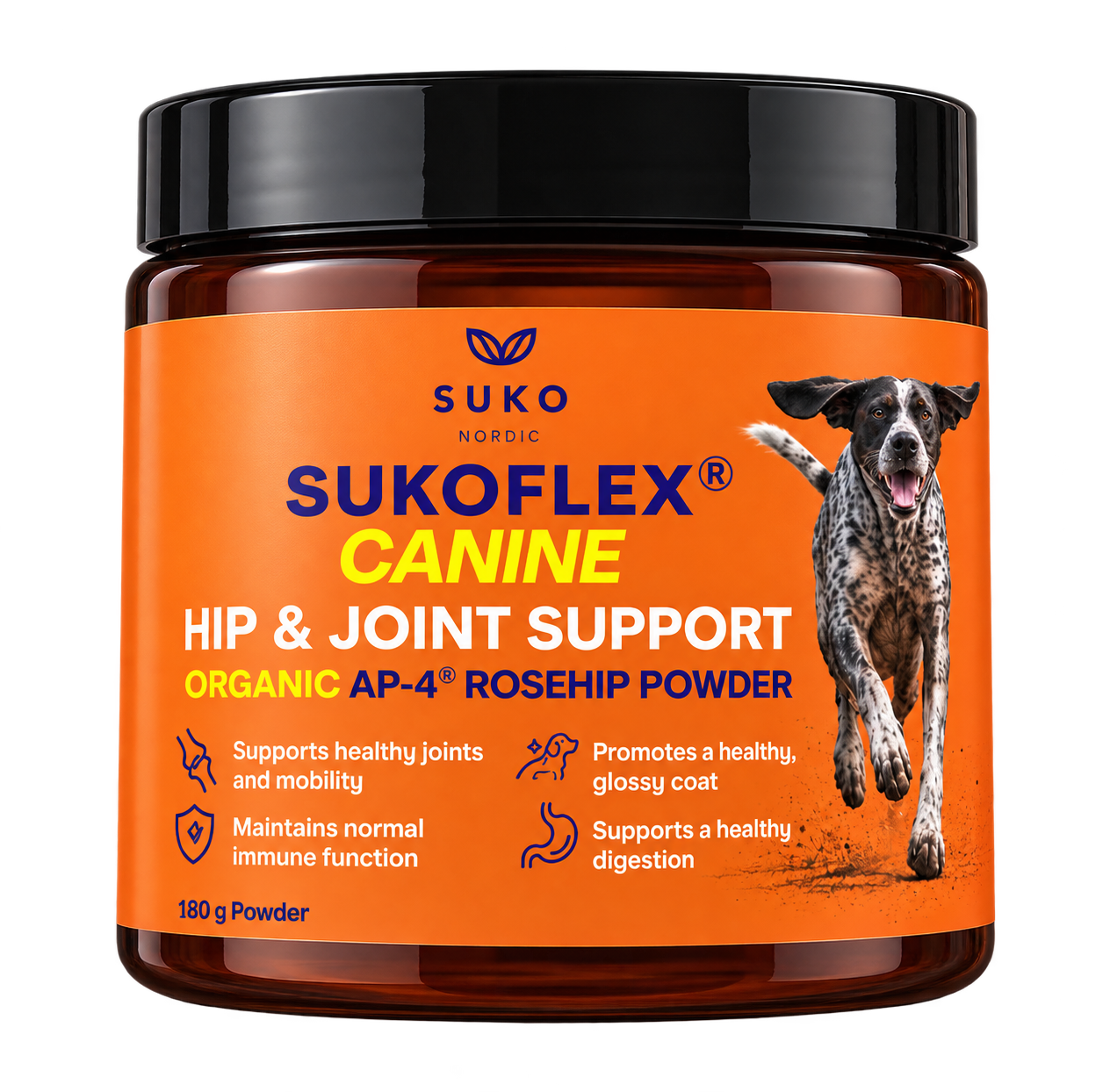
- A daily organic rosehip supplement like SUKOFLEX® CANINE supports healthy joints and mobility.
7 signs your dog's joints need support
1. They are stiff when they first get up
Many dogs move a little slowly for the first few minutes after a nap or first thing in the morning, then seem to "warm up". If you notice a careful stretch, a stiff first few steps or a slower start than they used to have, it is worth paying attention.
2. They hesitate before stairs, the car or the sofa
A dog who used to bound into the car and now stops, looks, and thinks about it is telling you something. Hesitating before a jump – or choosing not to jump at all – is one of the most common changes owners describe.
3. Walks are getting shorter
Lagging behind, stopping more often or turning for home earlier than usual is easy to put down to "just getting older". Often it is a sign that moving has become less comfortable.
4. They are resting more and playing less
Less interest in fetch, tug or the dog park can look like calm, mature behaviour. Sometimes it is. But when a once-playful dog prefers the bed most of the day, their joints may be part of the story.
5. They lick or chew at their legs
Repeated licking around the wrists, elbows, hips or knees can be a dog's way of soothing an area that does not feel right. It is easy to miss, especially if it happens at night.
6. They are more sensitive to touch
A dog who flinches, moves away or grumbles when you touch their hips or back may be uncomfortable. Changes in mood – being less patient with other pets or children – can also be a quiet signal.
7. Getting up and lying down takes effort
Watch how your dog moves from lying to standing. Pushing up with the front legs first, shifting their weight, or circling many times before lying down can all point to joints that need some extra support.
Why dogs hide joint discomfort
In the wild, showing weakness could make an animal vulnerable, and that instinct is still part of your dog today. Instead of crying out, most dogs simply adapt: they move a little less, skip the jump, or find a new way to get comfortable.
Because these changes happen slowly, they are easy to mistake for normal ageing. That is exactly why it pays to look closely now, rather than waiting until the signs become obvious. The years you share with your dog go by quickly – and every comfortable, active day matters.
What you can do today
Supporting your dog's joints does not have to be complicated. A few small, consistent habits can make everyday life more comfortable:
- Keep them moving gently. Two or three shorter, calmer walks are often better than one long, demanding outing.
- Make home joint-friendly. Add rugs on slippery floors, a supportive orthopaedic bed and a ramp or step to favourite spots.
- Watch their weight. Every extra kilo adds load to their joints. Your vet can help you find a healthy target.
- Add daily nutritional support. A simple, natural supplement in their food each day supports healthy joints over time.
For a full daily plan, read our guide to supporting joint comfort in ageing dogs.
How SUKOFLEX® CANINE supports your dog's joints
SUKOFLEX® CANINE is a single-ingredient organic rosehip powder made from the standardised AP-4® rosehip cultivar – the same rosehip used in SUKOFLEX® for humans. Rosehip is naturally rich in antioxidants, which help protect the body's cells from everyday oxidative stress.
As part of a daily routine, SUKOFLEX® CANINE is designed to support healthy joints, mobility and comfort in ageing and active dogs. There is no complicated schedule: just measure the right amount for your dog's body weight and stir it into their food once a day.
New to rosehip? Our beginner's guide explains what rosehip powder is and how it supports joints, and our dosage guide shows how much to feed.
When to talk to your vet
A supplement supports your dog's normal routine; it is not a substitute for veterinary care. Speak to your vet promptly if your dog is limping, crying out, showing swelling, refusing to move or if their behaviour changes suddenly. Your vet can check what is going on and help you build the right plan.
Frequently asked questions
At what age do dogs start showing joint changes?
It varies by breed, size and lifestyle. Larger breeds and very active dogs often show changes earlier, while many dogs start to slow down from around seven years of age. Paying attention early lets you support them sooner.
Is it just old age, or something more?
Some slowing down is a normal part of ageing, but it should not be ignored. If you notice several of the signs above, or the changes are sudden, talk to your vet.
How long does it take for a joint supplement to work?
Nutritional support is gradual and every dog is different. Consistency over several weeks matters more than any single dose, which is why SUKOFLEX® CANINE comes with a 90-day money-back guarantee.
More good days together
Noticing the signs is not a reason to worry – it is a chance to act. With gentle movement, a comfortable home, a healthy weight and daily support in the bowl, you can help your dog keep enjoying the walks, the games and the time by your side.

Help them keep up with you
Give your dog a simple daily habit that supports healthy joints and everyday mobility.
Try SUKOFLEX® CANINE✓ Free shipping Australia-wide · ✓ 90-day money-back guarantee