





















The short answer: Arthritis in dogs is diagnosed and managed by your vet. Natural support works alongside that care, not instead of it. It usually means gentle, regular movement, a healthy weight, a comfortable home and simple nutritional support, such as a single-ingredient rosehip powder that supports joint comfort and mobility as part of a daily routine.
Watching a dog slow down is one of the harder parts of sharing life with them. The stairs take longer, the morning walk gets shorter, and the easy jump onto the sofa becomes something your dog thinks about first. If you have started searching for natural ways to support a dog with arthritis, you are probably looking for something you can trust, understand and slot into an ordinary day without fuss.
This guide answers the questions caring owners ask us most often. It is written to be clear and honest: what natural support can do, where rosehip fits in, how to use it, and when a vet should be involved.
What does "natural joint support" mean for a dog with arthritis?
Arthritis is a condition your vet diagnoses and manages. Natural support does not mean replacing veterinary care. It describes everyday, food-based support that owners use alongside their vet's advice to help an ageing or active dog stay comfortable.
In practice, natural support usually means three things:
- Gentle, low-impact movement and weight management
- A comfortable home setup: warm bedding, non-slip surfaces, ramps instead of jumps
- Nutritional support, such as single-ingredient supplements that fit into the daily bowl
Arthritis in dogs is progressive, so the goal is rarely a quick fix. Owners who get the best results tend to think in terms of a steady routine, not a single product. Our guide How to Support Joint Comfort in Ageing Dogs: A Simple Daily Routine shows what that can look like day to day.
Which natural options do dog owners commonly use?
The most common natural approaches fall into a few groups:
- Joint-support nutrients such as glucosamine, chondroitin and green-lipped mussel
- Omega-3 sources like fish oil, which are widely used for general wellbeing
- Antioxidant-rich plant ingredients such as rosehip, turmeric and boswellia
- Lifestyle changes: controlled exercise, weight management and a supportive home environment
There is no single "best" option for every dog. A supplement that suits a lean, active six-year-old may be a different fit for a heavier, older dog who has slowed down considerably. For a side-by-side look, see Rosehip vs Glucosamine vs Fish Oil for Dogs.
How does rosehip fit into natural joint support for dogs?
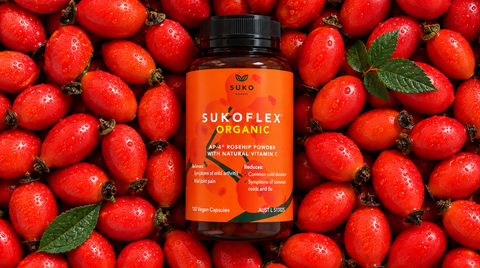
Rosehip is one of the better-known plant ingredients in dog joint care. The fruit of the dog rose (Rosa canina) contains naturally occurring antioxidants and plant compounds, and it has been used in human joint and mobility supplements for decades.
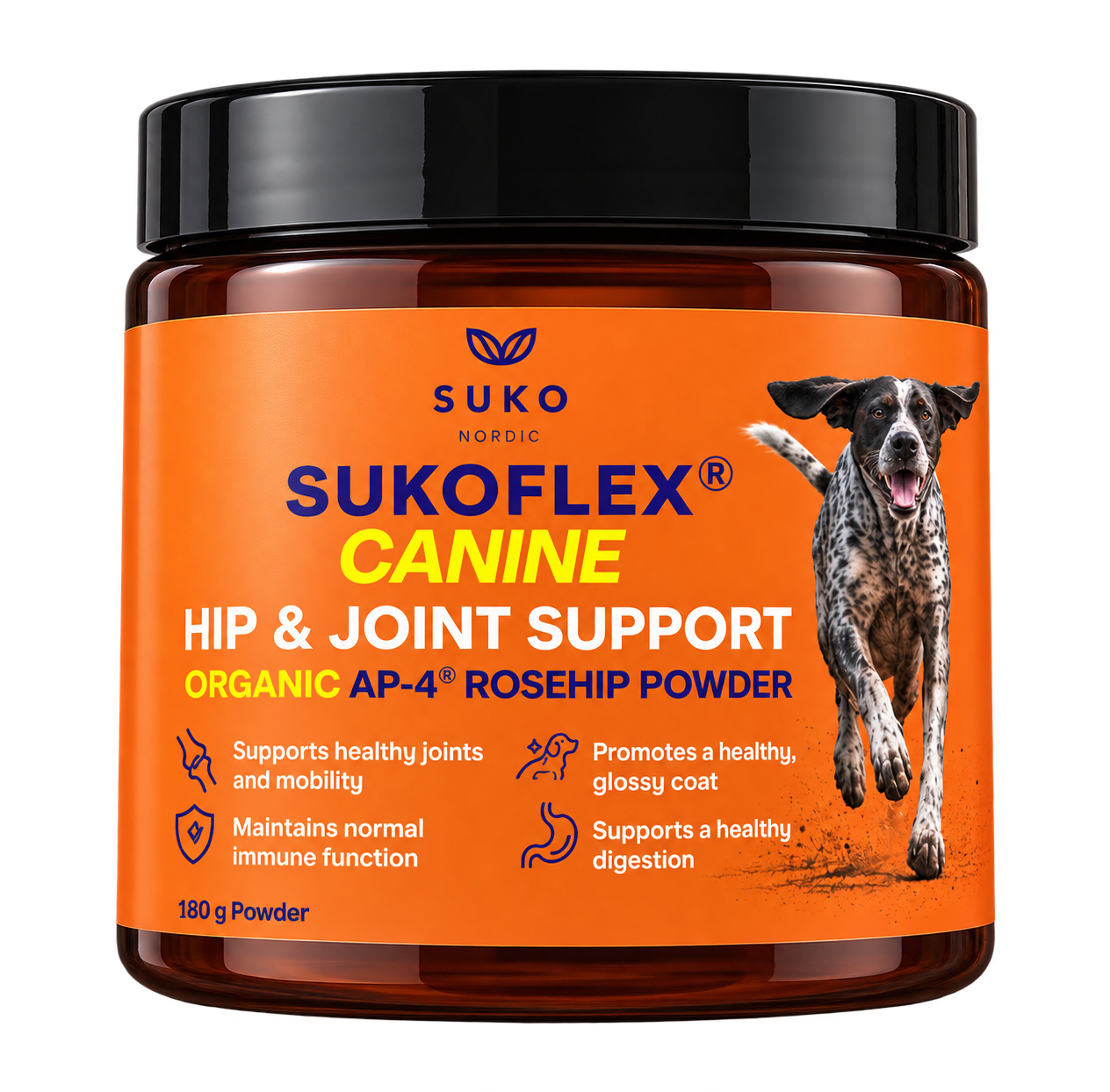
SUKOFLEX® CANINE is a single-ingredient supplement: organic AP-4® rosehip powder, with nothing else added. It is made from the same standardised AP-4® rosehip used in SUKOFLEX® for humans, and it supports joint comfort and mobility in ageing or active dogs as part of a simple daily routine.
Because it contains one ingredient, it is easy to understand and easy to combine with the rest of your dog's food. It is not a medicine, and it does not treat or cure arthritis.
What makes AP-4® rosehip different?
AP-4® is a specific, standardised rosehip cultivar grown in Southern Chile and processed to a consistent specification. Standardisation matters: it means each batch is measured against the same quality markers rather than varying from harvest to harvest. Read more in Why Rosehip Source Matters for Dogs: The AP-4® Difference.
Traceability is central to how we work. SUKO Nordic Australia is a family-led brand run by two sisters with master's degrees in Pharmacy and Cell Biology, and we would rather explain exactly what is in the tub than make sweeping promises about it.
How much rosehip powder do I give my dog?
Feeding directions are specific to the product, so always follow the directions on the SUKOFLEX® CANINE label or our dosage guide for your dog's weight, and check with your vet if your dog is on medication or has an existing health condition.
A few practical points help in everyday use:
- Use the measuring guidance on the pack rather than estimating by eye
- Add it to food rather than giving it dry
- Keep the amount consistent from day to day, because consistency is what makes a routine work
- Store the tub as directed so the powder stays in good condition
How do I introduce rosehip into my dog's feeding routine?
Most owners find a gradual introduction is easiest. Start with a smaller amount than the full daily serving, mix it thoroughly into your dog's usual food, and build up to the label amount over the first week or two.
Rosehip powder has a mild, earthy taste and mixes easily into wet food, raw food or a little warm water poured over kibble. If your dog is a fussy eater, introducing it alongside something familiar, rather than at the same time as any other change, usually goes more smoothly.
Once it is part of the bowl, there is nothing else to remember. That simplicity is deliberate: a supplement only helps if it is easy enough to give every day.
Is rosehip powder safe for dogs?
Rosehip is a food-based ingredient, and single-ingredient rosehip powders are generally well tolerated by healthy dogs when fed as directed. As with any change to your dog's diet, watch for anything unusual in the first week. Our article Is Rosehip Safe for Dogs? covers this in more detail.
Speak to your vet before starting SUKOFLEX® CANINE if your dog is pregnant or nursing, is on prescribed medication, has a diagnosed health condition, or is due for surgery. Your vet knows your dog's history and can confirm whether a rosehip supplement is appropriate alongside their current care.
When should I speak to my vet about my dog's arthritis?
Contact your vet if you notice:
- Sudden or severe lameness, or a leg your dog will not put weight on
- Visible swelling, heat or pain when a joint is touched
- A rapid change in mobility rather than a gradual one
- Reluctance to eat, or a change in behaviour or temperament
- Any sign that your dog is struggling rather than simply slowing down
Arthritis is a medical condition, and a diagnosis gives you a plan. Natural support works best as part of that plan, not instead of it.
The takeaway
Natural joint support for a dog with arthritis is about steady, everyday care: sensible movement, a comfortable home, and simple nutritional support you can actually keep up with. For owners who want a single, traceable ingredient they can add to the bowl each morning, organic AP-4® rosehip is a simple place to start, alongside your vet's guidance and with realistic expectations about what a supplement can and cannot do.