













Short answer: every extra kilo your dog carries adds load to their hips, knees and elbows every time they move. A long-term study of Labrador Retrievers found that dogs kept lean lived a median of 1.8 years longer and needed treatment for osteoarthritis around three years later than their heavier littermates. Keeping your dog at a healthy weight is one of the most useful things you can do for their joints.
Key takeaways
- Extra weight means extra load on every joint, every step.
- In a lifelong Labrador study, lean dogs lived a median of 1.8 years longer.
- The lean dogs needed treatment for hip osteoarthritis around three years later.
- You can check your dog's shape at home in under a minute.
- Small changes to food and treats add up over months.
What the research shows
In a well-known study, 48 Labrador Retrievers were paired with a littermate. One dog in each pair was fed 25% less food than the other from 8 weeks of age for the rest of its life (Kealy et al., 2002).
- The leaner dogs lived a median of 13 years, compared with 11.2 years for the heavier group.
- At age 2, one of 24 lean dogs showed hip osteoarthritis on X-ray, compared with six of 24 in the heavier group.
- The lean dogs did not need treatment for osteoarthritis until a mean age of 13.3 years, about three years later than the heavier dogs.
Source: University of Pennsylvania summary of the study.
How to check your dog's shape at home
- Ribs: you should be able to feel them easily under a thin layer of fat, without pressing hard.
- Waist: looking down from above, you should see a waist behind the ribs.
- Tummy: from the side, the belly should tuck up towards the back legs.
If you are not sure, ask your vet to check your dog's body condition at the next visit. They can also tell you what a healthy weight looks like for your dog.
Simple ways to help your dog stay lean
- Measure food. Use a kitchen scale or a proper measuring cup rather than guessing.
- Count the treats. Treats, chews and table scraps all add up. Take them out of the daily food allowance.
- Keep moving gently. Regular, steady walks are better for stiff dogs than the occasional long outing.
- Weigh regularly. A monthly weigh-in helps you spot small changes early.
- Adjust with age. Older and less active dogs often need fewer calories than they used to.
Choose low-calorie extras
If your dog has a daily supplement, check how many calories it adds. A powder stirred into food adds very little, while some chews add more. Read joint powder vs chews for dogs for a side-by-side look.
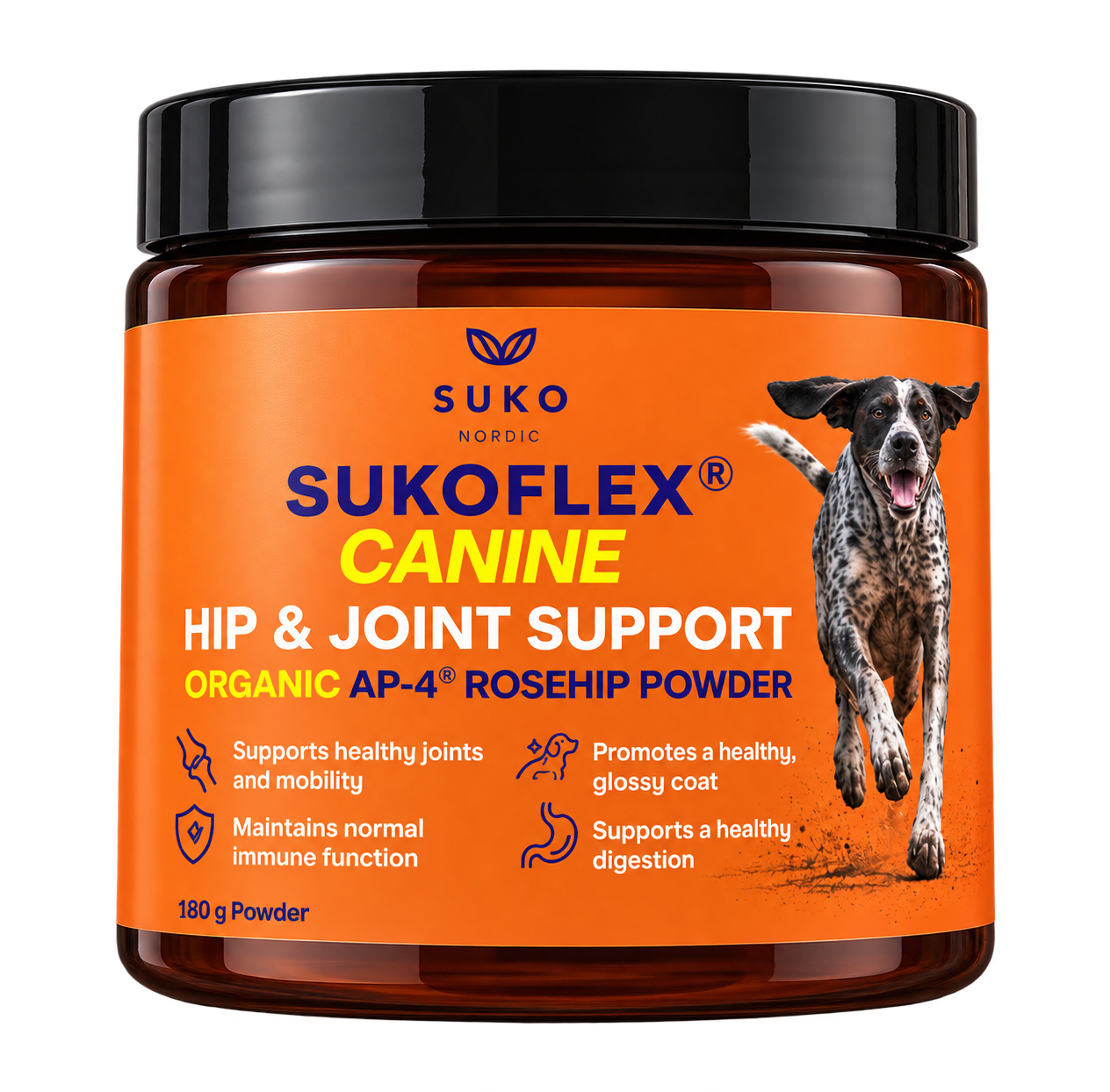
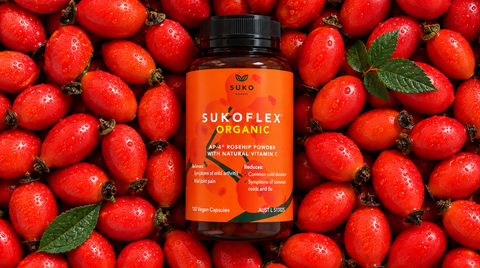
SUKOFLEX® CANINE is a single-ingredient organic rosehip powder that supports healthy joints and mobility as part of a daily routine, alongside a healthy weight and regular exercise.

FOR DOGS · ORGANIC AP-4® ROSEHIP
SUKOFLEX® CANINE
One organic ingredient, dosed by body weight and stirred into food once a day. Supports healthy joints and mobility.
✓ Free shipping Australia-wide✓ 90-day money-back guarantee✓ Subscribe & save 30%
Shop SUKOFLEX® CANINEFrequently asked questions
How do I know if my dog is overweight?
If you cannot easily feel the ribs, cannot see a waist from above, or the belly does not tuck up from the side, your dog may be carrying extra weight. Your vet can confirm this.
How fast should my dog lose weight?
Slow and steady is best. Ask your vet for a target weight and a plan, especially for older dogs or dogs with joint stiffness.
Does weight matter for large breed dogs?
Yes. Large and giant breeds put a lot of load on their joints, so staying lean matters even more. See our guide to joint care for large breed dogs.
The takeaway
A lean dog carries less load on every joint, every day. Measure meals, count treats, keep moving gently and check your dog's shape every month. It is simple, it costs nothing, and the research suggests it can make a real difference over a lifetime.