






















You call your dog for their morning walk, and instead of springing out of bed, they rise slowly, stretch carefully and take a few stiff steps before they get going. Ten minutes later, they seem almost like their old self. If this sounds familiar, you are not alone. Morning stiffness is one of the most common things owners of ageing and active dogs notice, and it is often the first sign that their dog's joints could use a little extra support.
In our guide to the 7 signs your dog's joints need support, stiffness when first getting up is sign number one. This article looks at that sign in more detail: why your dog may be stiff in the morning, what you can change at home, and when it is time to talk to your vet.
Why is my dog stiff in the morning?
Joints are designed to move. When your dog is active, movement helps keep the joints and the muscles around them warm and supple. During a long sleep, everything is still for hours, so the first few movements of the day can feel harder work. Several everyday factors can make this more noticeable:
- Age. As dogs get older, their joints naturally become less flexible, and that can show up most clearly after rest.
- A busy day before. A long hike, a big play session or a day of work can leave an active dog feeling it the next morning.
- Cold weather. Many owners notice their dog is stiffer on cold winter mornings than in summer.
- Where they sleep. A thin bed, a cold floor or a draughty spot gives joints less support overnight.
- Extra weight. More body weight means more load on the joints with every step, including those first steps of the day.
- Size and breed. Large and giant breeds carry more weight through their hips, elbows and knees, so stiffness can appear earlier.
Morning stiffness that eases within a few minutes of gentle movement is a common pattern. It is still worth paying attention to, because it is often the earliest clue that your dog's joints would benefit from a little more care.
What morning stiffness can look like
Dogs rarely complain, so the signs are usually subtle. You might notice your dog:
- getting up in stages, front legs first, then a pause before the back legs follow
- taking a long, careful stretch before moving off
- walking stiffly or with shorter steps for the first few minutes
- staying in bed when you pick up the lead, when they used to be first at the door
- loosening up and moving more freely once they are warmed up
How to help a dog who is stiff in the morning
The good news is that small changes to your dog's routine and environment can make mornings easier.
1. Upgrade the bed
Your dog spends many hours lying down, so their bed matters. A thick, supportive orthopaedic bed spreads their weight evenly and eases pressure on hips and elbows. Choose one large enough for your dog to stretch out fully, and place it somewhere warm, dry and away from draughts.
2. Keep them warm on cold nights
On cooler nights, a blanket in the bed or a warm sleeping spot indoors can help. Short-coated and senior dogs may also appreciate a dog coat on chilly morning walks.
3. Start the day slowly
Give your dog a few minutes to wake up before heading out. Begin the morning walk at a gentle pace and let them sniff and potter for the first five to ten minutes. Save any faster activity, such as ball games, for once they are properly warmed up.
4. Spread exercise across the day
Regular, moderate movement is kinder to joints than one big burst. Two or three shorter walks are often better than a single long one, and they help avoid the stiffness that can follow an especially busy day.
5. Make the home joint-friendly
Non-slip rugs on tiles or polished floorboards give your dog secure footing for those first stiff steps. A ramp or low step up to the sofa or car means less jumping. For more ideas, see our simple daily routine for joint comfort in ageing dogs.
6. Keep their weight healthy
Keeping your dog lean is one of the most valuable things you can do for their joints. You should be able to feel the ribs without pressing hard and see a visible waist from above. Your vet can help you set a target weight.
7. Add daily nutritional support
Because morning stiffness is about how joints feel day after day, many owners choose to add consistent nutritional support to their dog's routine. Organic rosehip is one of the best-known natural options.
How organic rosehip can help
Rosehip is the small red-orange fruit of the wild rose. It is naturally rich in antioxidants, which help protect the body's cells from oxidative stress, the everyday wear and tear caused by free radicals. Because your dog's joints work every time they move, this antioxidant support is one of the reasons rosehip is used to support healthy joints in dogs. You can read more in our guide to rosehip powder for dogs.
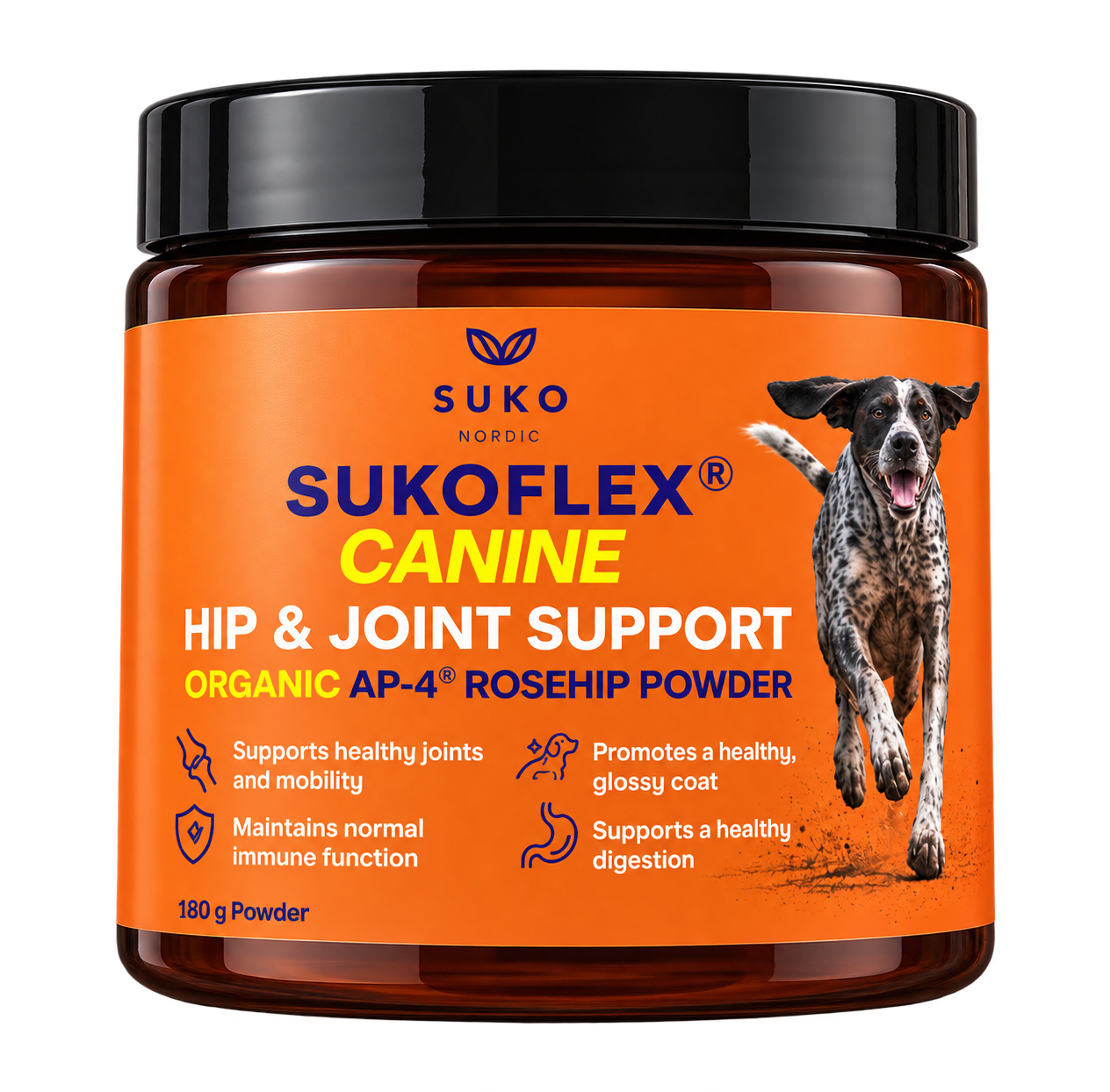
SUKOFLEX® CANINE Organic Rosehip Powder is a single-ingredient supplement made from the standardised AP-4® Rosa canina rosehip, grown organically in Southern Chile. It is the same ingredient used in SUKOFLEX® for humans. It is designed to support joint comfort, mobility and healthy immune function in ageing or active dogs. Simply stir the recommended amount, based on your dog's body weight, into one meal each day.
It is daily nutritional support rather than a quick fix, so consistency over weeks matters more than any single scoop. Pairing it with breakfast is an easy way to make it part of the morning routine.
When to talk to your vet
Mild stiffness that eases quickly is common, but it should never simply be accepted without a check-up. Speak to your vet promptly if you notice:
- stiffness that lasts long after your dog has warmed up
- limping or favouring one leg
- swelling, heat or pain when a joint is touched
- stiffness that appears suddenly or gets noticeably worse
- reluctance to walk, climb stairs or get up at all
A supplement supports your dog's normal routine. It is not a substitute for veterinary care, and your vet is the best person to assess what is behind any change in your dog's movement.
Frequently asked questions
Is it normal for an older dog to be stiff in the morning?
Some stiffness after rest is common in older dogs, especially if it eases within a few minutes of gentle movement. It is still worth mentioning to your vet at your dog's next check-up, so they can confirm what is normal for your dog.
Why is my dog stiff after lying down but fine on walks?
Joints and muscles tend to feel stiffer after a period of stillness and loosen up with movement. That is why many dogs move awkwardly for the first few minutes and then seem completely comfortable once they are warmed up.
Can young dogs be stiff in the morning?
Young dogs can feel stiff after an unusually busy day, just as we do. Regular or worsening stiffness in a young dog is less typical and should be checked by your vet.
When is the best time to give SUKOFLEX® CANINE?
Any meal your dog never skips works well. Many owners stir it into breakfast so it becomes part of the morning routine. Follow the feeding directions on the pack, and check with your vet if your dog has a health condition or takes medication.
Better mornings start with small habits
A dog who is stiff in the morning is often telling you something quietly. A warm, supportive bed, a slow start to the day, regular gentle exercise, a healthy weight and a consistent daily supplement such as SUKOFLEX® CANINE can all help make mornings more comfortable.
Pay attention to those first few steps of the day. They say a lot about how your dog is feeling.